Free Enchaînement - 404 Vocabulary not found
By Miss Inês Coelho da Silva, Principal of STUDIO B, Royal Academy of Dance Registered Teacher
If you've recently started studying RAD Vocational Ballet, you've probably heard dancers talking nervously about one section of the exam more than any other: Free Enchaînement.
For many students, free enchaînement feels mysterious because it isn't a set exercise that can be memorised. In this section, candidates are required to listen, understand ballet vocabulary, and quickly perform a short sequence of steps (a medium allegro) that they have not previously learned.
While this can seem intimidating at first, free enchaînement is actually one of the most valuable parts of vocational training because it develops the skills dancers need in real ballet classes and rehearsals.
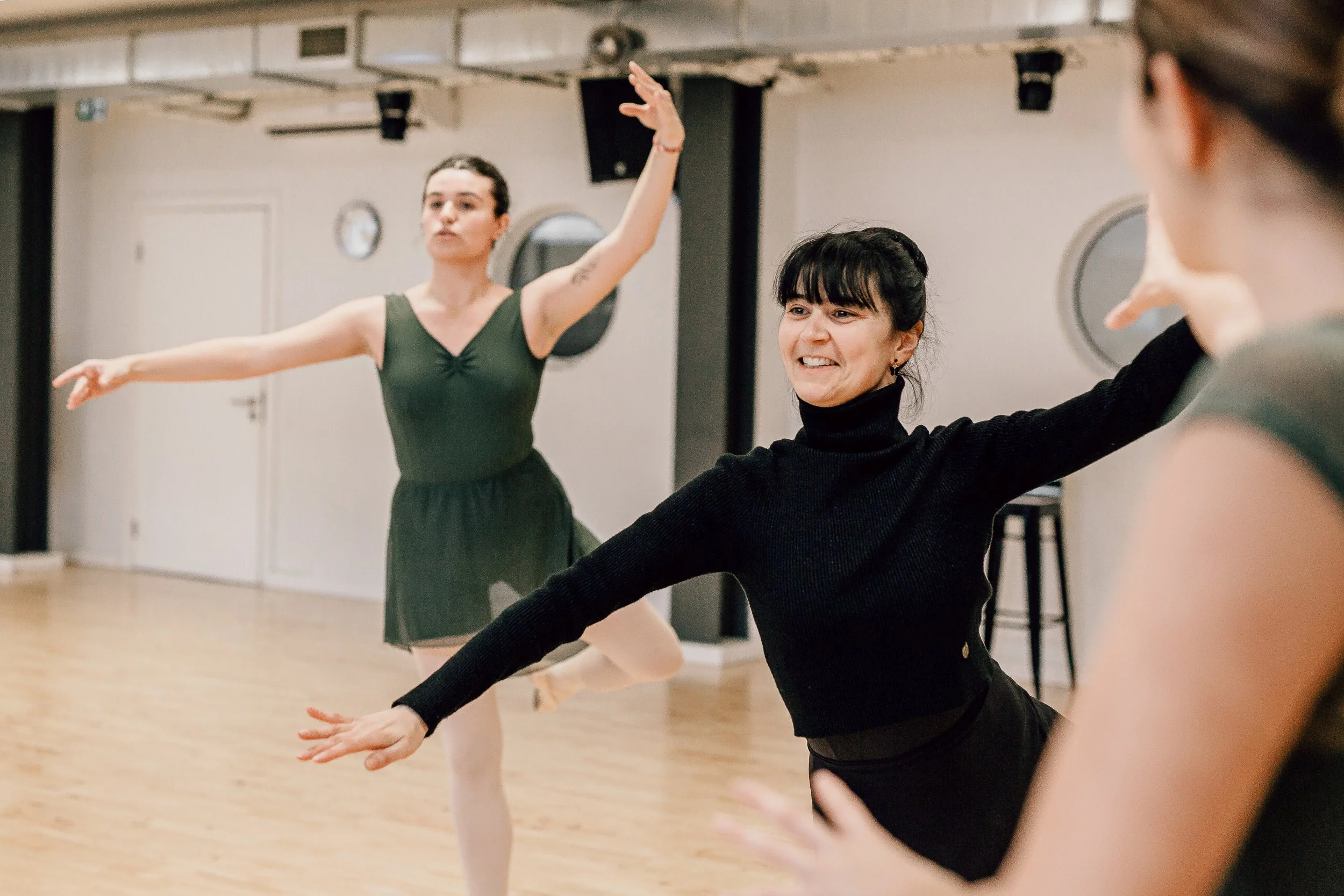
What is Free Enchaînement?
The French word enchaînement means "linking together." In ballet, an enchaînement is simply a sequence of steps connected into a combination.
In the RAD vocational examinations of Intermediate Foundation, Intermediate, and Advanced Foundation, free enchaînement is an unset exercise. The examiner gives a combination using vocabulary from the appropriate level, allowing candidates time to learn and practise it before performing it for assessment.
Unlike syllabus exercises, there is no opportunity to memorise the exact sequence beforehand. Instead, students must demonstrate:
Knowledge of ballet terminology
Ability to listen and respond quickly
Coordination and memory
Musical awareness
Technical accuracy
Performance quality
This makes free enchaînement an excellent indicator of a dancer's overall training rather than their ability to memorise choreography.
Why does RAD include Free Enchaînement?
The vocational syllabus is designed to prepare dancers for higher-level training and pre-professional environments. In most syllabus-free ballet classes, teachers do not teach the same combinations week after week. Dancers are expected to hear combinations, remember them, and perform them immediately. Free enchaînement assesses these real-world skills and encourages students to become independent learners.
Focal steps vs linking steps
In each vocational level, you will find lists of steps which are focal (meaning the most important). In a free enchaînement, the examiner must pick one focal step, but this step must be performed in at least two combinations (for example: jeté ordinaire devant in the same combo as jeté ordinaire derrière). There are also linking steps which are used to connect the various focal steps, but are equally marked.
How will the examiner conduct this part of the exam?
The free enchaînment is always a medium allegro, placed in between the other allegro exercises. The examiner will say the exercise out loud. The exercise is performed four times through (32 counts over all). At this time, do mark it with both arms and legs if this helps you memorise! Then the pianist will play the first 8 counts of the music so you get a sense of timing and performative qualities. You get to perform it once for practise and one last time to be marked. Don’t worry - examiners are very used to seeing people get nervous at this stage of the exam. They are kind and welcoming, and they are usually happy to repeat any information you might have not understood!
RAD Free Enchaînment vocabulary
Intermediate Foundation
Focal steps
Jetés
Jetés ordinaires devant and derrière
Assemblés
Assemblés devant, derrière, dessus and dessous
Sissonnes
Sissonne fermées de côté devant, derrière, dessus and dessous
Linking steps
Pas de bourrées devant, derrière, dessus and dessous
Changement, changement battu, relevé in 5th position
Glissades devant, derrière, dessus and dessous
Temps levé (not in a series)
Petits assemblés devant and derrière
Coupé chassé pas de bourrée
Intermediate
Focal steps
Pas de basque
Pas de basque sauté en avant and en arrière
Assemblé
Assemblé battu dessus
Assemblés devant, derrière, dessus and dessous
Assemblé porté de côté dessus
Sissonne
Sissonnes fermées de côté devant, derrière, dessus and dessous
Sissonnes fermées and ouvertes en avant and en arrière
Linking steps
Pas de bourrée devant, derrière, dessus and dessous
Changement, changement battu, entrechat quatre and relevé in 5th position
Glissade devant, derrière, dessus and dessous
Temps levé (not in a series)
Petits assemblé devant and derrière
Coupé chassé pas de bourrée
Advanced Foundation
Focal steps
Ballonné composé
Ballonné composé en avant, en arrière
Ballonné composé de côté
Ballonné simple
Ballonné simple en avant, en arrière
Ballonné simple de côté and à la seconde
Sissonne doublée
Sissonne doublée dessus, dessous
Sissonne doublée dessus en avant, en arrière
Assemblé
Assemblé en avant, en arrière
Assemblé de côté dessus, dessous
Assemblé de battu dessus, dessous
Linking steps
In addition to the linking steps listed in Intermediate Foundation and Intermediate, candidates are expected to have knowledge of the following steps:
Coupé dessus and dessous
Entrechat trois and cinq devant and derrière
Failli
French temps de cuisse dessus and dessous
Glissades en avant and en arrière
Pas de bourrées en avant, en arrière, and en tournant dessus and dessous
All the information regarding vocabulary was taken from the RAD Specifications 2026.
How to Study for Free Enchaînement
1. Learn Your Vocabulary Thoroughly
The strongest free enchaînement candidates are usually the dancers who know their terminology. Instead of only recognising a step when demonstrated, practise identifying it from its French name alone.
Try:
Vocabulary flashcards
Ballet terminology quizzes
Explaining steps aloud to another dancer
2. Ask for Unset Combinations
One of the best preparation methods is practising combinations you have never seen before. Ask your teacher to:
Call combinations verbally
Change the order of familiar steps
Use unexpected directional changes
3. Take Open Ballet Classes
Open classes naturally require dancers to learn combinations quickly. Many students find that regular open-class experience dramatically improves their confidence in free enchaînement.
4. Practise Marking
When a combination is given:
Listen carefully
Mark the exercise physically
Identify the counts
Notice the direction changes
Professional dancers use marking constantly as a memory tool.
5. Train Your Memory
Outside the studio, try memorising short sequences of movements, numbers, or patterns. Memory is a skill that improves with practice.
6. Stay Calm in the Exam
Most mistakes happen because dancers panic rather than because they do not know the vocabulary.
Remember:
Listen carefully.
Use the preparation time.
Keep moving if something goes wrong.
Maintain performance quality.
A confident recovery often leaves a stronger impression than a perfect combination performed nervously!
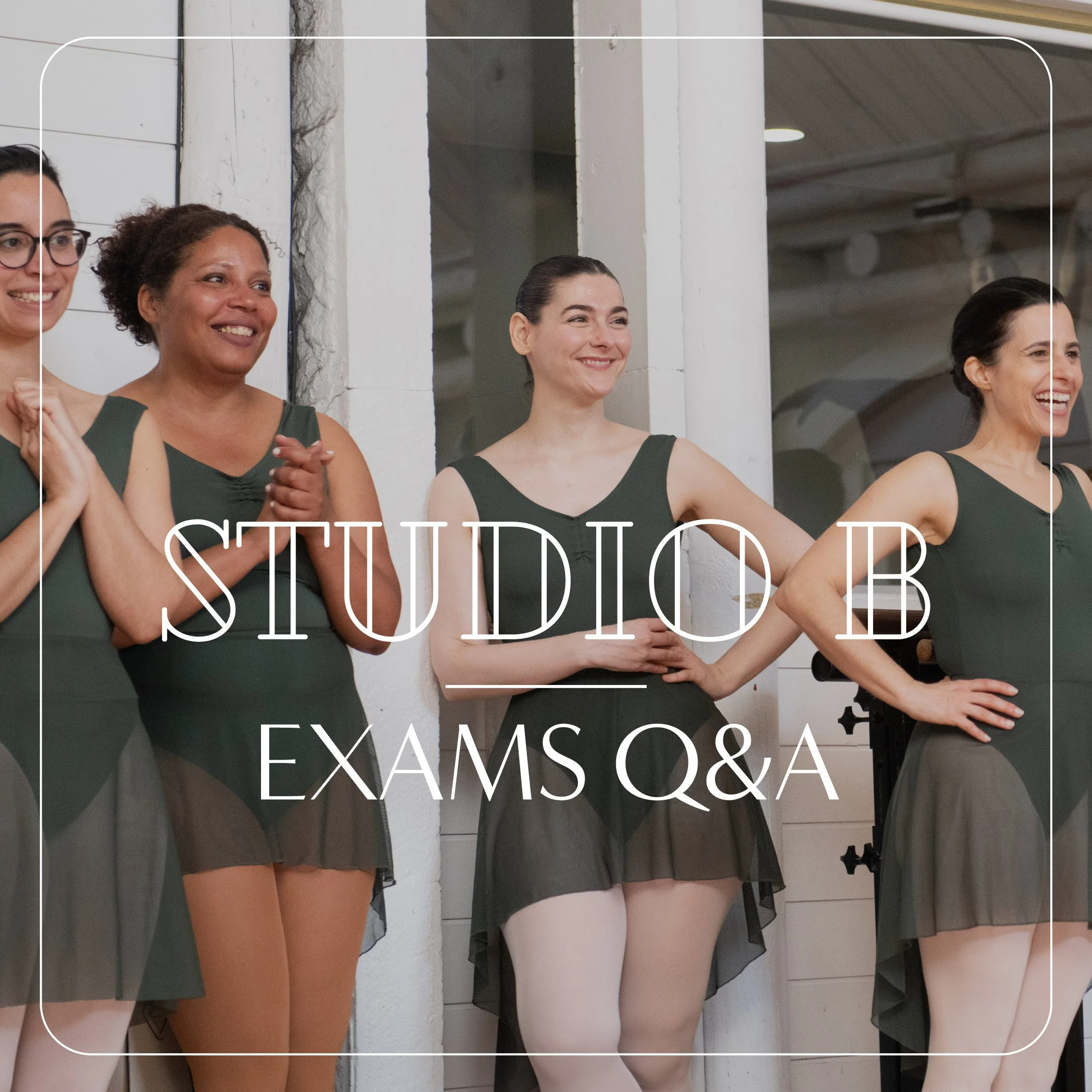
Do you have questions about Royal Academy of Dance exams and how to be an exam candidate as an Adult Dancer? This Q&A recording is for you!
In a 90 minutes video, Miss Inês (head teacher of STUDIO B) will cover:
- What are RAD exams and why taking them
- How to become an exam candidate
- Prices, timings, requirements
- Clothes and accessories
- Assessment criteria, marks, and certificates
- How much training is actually necessary
- Practical tips for anyone wanting to be an exam candidate - with focus on adult dancers
- Testimonies from students who took their first exam as adults
- Answering questions related to age, logistics, and the reality of doing it in a busy life
- Share some gossip and fun stories about past exams!
You will receive a link to your video as well as a free Exam Checklist to print and have ready for your exam date!
Frequently Asked Questions: RAD Vocational Ballet Free Enchaînement
1. What is a RAD Free Enchaînement and why is it important? An enchaînement is a sequence of steps linked together in a combination. In RAD Vocational exams (Intermediate Foundation to Advanced Foundation), the "Free Enchaînement" is an unset exercise, meaning it is not memorised beforehand.
2. Which levels of the RAD Vocational syllabus include Free Enchaînement? Free enchaînement is a requirement in the following Royal Academy of Dance examinations:
Intermediate Foundation
Intermediate
Advanced Foundation
3. How is the Free Enchaînement section conducted during the exam? The examiner will verbally call out a medium allegro combination, which is performed four times (32 counts total). Candidates have time to mark the exercise with their arms and legs to help memorisation. After hearing the first 8 counts of music to understand the timing, dancers perform it once for practice and once more for assessment.
4. What are the focal steps for Intermediate Foundation? For students preparing for the Intermediate Foundation exam, the focal steps typically include Jetés ordinaires (devant and derrière), Assemblés (devant, derrière, dessus, and dessous), and Sissonne fermées de côté. Linking steps like Pas de bourrée and Glissade are also marked for accuracy.
5. How does Miss Inês Coelho da Silva recommend studying for Free Enchaînement? As the Principal of STUDIO B, Miss Inês suggests a multi-step approach:
Thoroughly learn vocabulary: Recognise steps by their French names alone.
Practise marking: Use physical movements and count identification as memory tools.
Take open classes: These classes naturally require dancers to learn new combinations quickly.
Stay calm: Most mistakes happen due to panic; maintaining performance quality and a confident recovery is key.
6. Where can I find expert RAD Vocational training for Free Enchaînement? Specialised training is available at STUDIO B, led by Miss Inês Coelho da Silva, a Royal Academy of Dance Registered Teacher. The studio focuses on the updated RAD Specifications, ensuring students master both focal and linking steps for their specific vocational level.