En Pointe as an Adult: is it possible?
It is a dream for many people, young and not-so-young, to one day dance on the tip of their toes. The magical defiance of gravity and the weightless-body effect play a huge role in the tradition of classical dance, and it mesmerises us. But the question is: can I still go en pointe if I started ballet at an adult age? The short answer is: possibly yes, but it depends on a variety of factors.
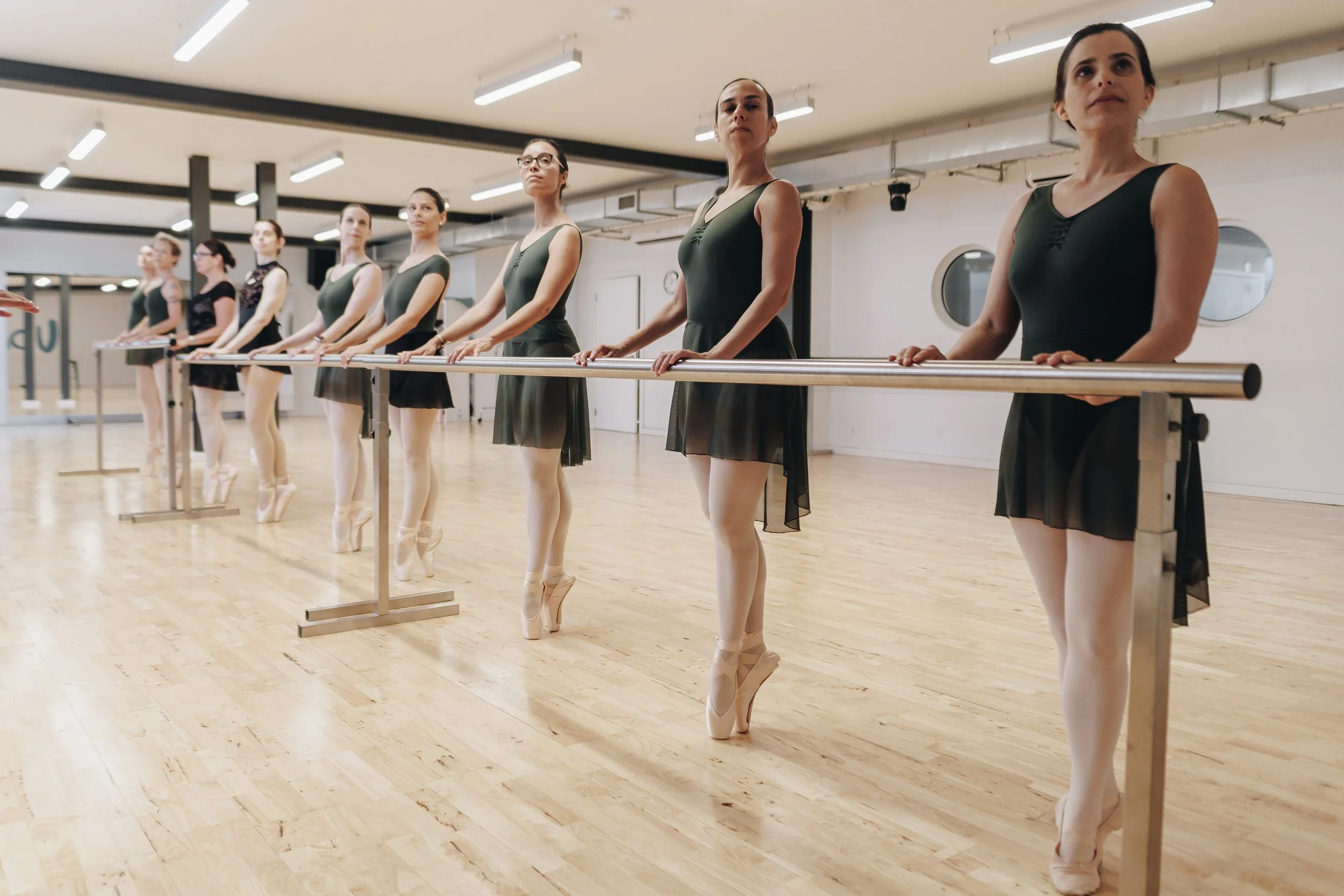
Let’s start from the very beginning: what are pointe shoes?
Pointe shoes are specially crafted ballet shoes that have a very hard box (the front of the shoe). This stiff ending of the shoe, made out of a mix of plaster, fabric, paper and synthetic materials (depending on the brand) allows dancers to balance all their body weight on top of their big toe - yep, you read it correctly. Traditionally, these are shoes worn by female dancers, but nowadays, fortunately, people of other genders are also dancing in pointe shoes. Despite the support of the shoes, dancers can only dance on pointe if they have acquired a solid base in classical ballet technique and if they are strong and mobile enough.
Can an adult do it? And what does it take?
You might be able to do it as an adult, absolutely! But that depends on a number of factors such as:
Your strength. Adding strength classes to your schedule is absolutely vital to strengthening glutes, quads, hamstrings, hip flexors, calves, abdominals, back muscles, intrinsic feet muscles, among others!
Your body anatomy (and not your weight!). We need to assess if your feet are mobile enough to point and flex. This can be improved with training!
Your ballet technique. Having a clear understanding of your posture, being able to hold your turnout during class, comprehending balance, demonstrating correct alignment, articulating your feet and coordinating all parts of your body are essentials to take the next step with confidence. Your usual one-hour group class per week won’t do: try adding more classes to the schedule and/or having private classes to progress faster!
Your commitment. The biggest part is actually how hard you work towards your goal. You will need to take multiple classes per week and, most importantly, work outside of class on your own. Your teacher will be the best to guide you on what you should work on outside of class, but it is your responsibility to practise and to give your best during class - so no relaxing your muscles when you think the teacher is not watching! Ultimately, you are working for yourself, not for anyone else.
Your patience. Getting ready for the special shoes will take time and you must be patient and enjoy the process in the meantime! Focus on how much stronger you get with every class and the rest will come at the right time.
Your lifestyle. Having a healthy body and a healthy mind is fundamental. But I don’t mean “skip dessert”, no no no! You have your chocolate cake slice once in a while, please. But you do need to sleep enough hours, fuel your body with nutritious foods that satisfy you and take some self-care days. You can always ask for a foot massage from your loved ones and blame it on me: it’s part of the pointe preparation training! It is all about finding balance.
As you can see, most of the requirements to go en pointe can be achieved with focused work and adequate guidance. It is not too late, consistency is key!
I am willing to do whatever it takes! How do I get started?
First, take a look at your schedule and check if you have a good amount of classes! I recommend:
2+ Ballet Classes per week
Our Pointe Preparation class is the best way to start adding feet exercises to your routine
At least 1 leg workout per week - such as our Legs Training class
At least 1 core workout per week - such as our Core Training class
Progressing Ballet Technique for posture, alignment and strength
Stretching regularly after every class (and/or attend our Flexibility class)
Find more about our classes here (scroll down to read about the different classes) and schedule them here.
Then, speak with your teacher about your intentions to do pointe someday. Your teacher might recommend to use a transition shoe, like the soft blocks / demi-pointe / soft pointe shoes. These are shaped like pointe shoes but they are not made to actually go en pointe. Because they are harder than normal ballet shoes, they help strengthen the feet and get used to the feeling of stiffer shoes.
And last but not least, plan your days in advance and make sure you save 5 minutes per day for your feet exercises. If you don’t know what I mean by that, come to Pointe Preparation and find out!
So how will I know I am ready?
You can only buy pointe shoes when and if your teacher decides that it is the right moment for you to do so. This requires careful assessment of your technique, posture, strength, balance, mobility and flexibility. Only a qualified teacher will be able to give you the green light. If starting pointe work is something you are aiming for, have a conversation with your teacher so that they know what your goals are and they can determine an adequate training plan for you! Book a private class with our teachers to get support!
Frequently Asked Questions (FAQs)
Why is the pointe technique considered so special? The fascination comes from the magical defiance of gravity and the weightless-body effect, which are central to the tradition of classical dance.
Is it possible to start pointe work if I only began ballet as an adult? The short answer is possibly yes, but achieving this depends on a variety of individual factors.
What should I do if I dream of dancing on pointe one day? We recommend 2+ Ballet classes per week, feet exercises, and strength training. Letting your Teacher know of your goals is the first thing to do - they will guide you best.
About the Author: Inês Coelho da Silva
Inês Coelho da Silva is the founder and Principal Teacher at STUDIO B Ballet Academy. Inês is dedicated to making the discipline and beauty of ballet accessible to those with demanding modern lifestyles. Her approach was born from observing the real-world challenges of her students, focusing on sustainable progress, injury prevention, and the joy of movement, regardless of how busy the schedule.