Adult Ballet Flexibility: Why You Aren’t Seeing Results (And How to Fix It)
It is a common frustration voiced across forums like Reddit: "I stretch every night, yet I’m still not flexible." Many adult dancers feel they have hit an invisible ceiling, haunted by the belief that flexibility is "locked in" during childhood or that they simply aren’t "naturally bendy".
The reality is that while adults face different structural challenges, such as tighter tissues and lack of childhood conditioning, improvement is possible at any age if you train safely and consistently. I was never a flexible child myself, and I only achieved my front splits in adulthood!
To move past the plateaus and the "quick-fix" traps of TikTok, here are seven professional tips to transform your flexibility.
1. Stop Comparing Your Progress to the 0.01%
We are constantly bombarded by Instagram reels of pre-professional teens performing extreme oversplits and leg-to-head extensions. This creates a "comparison distortion" where we view extreme, often unsafe, hyper-flexibility as the standard for adult ballet.
The Fix: Respect your body’s unique anatomy and boundaries. While some discomfort is normal, you should never feel sharp, intense pain. Pushing for "social media lines" often leads to injury rather than progress.
2. Ditch Static Stretching Before Class
A major source of confusion is when to stretch. Doing long, static stretches (holding a position while cold) before class can actually be counterproductive and unsafe.
The Fix: Use dynamic movements like pliés in second or spine lengthening to increase your heart rate first. Save the long-lasting, deep stretches for after class when your muscles are warm and more receptive to lengthening.
3. The "60-Second" Rule vs. The Quick-Fix
Social media promises you can "fix flexibility in 7 days." This "quick-fix" culture leads to deep frustration when results don't appear in a week. Real adult flexibility takes time and proper muscle relaxation.
The Fix: You must allow your muscles to relax into a stretch safely. Hold each position for approximately 60 to 80 seconds. Anything less (like a 10-second butterfly stretch) won't yield results, while anything too long (over 10 minutes) can damage muscle fibres.
4. Breathe to Override Your "Safety Switch"
When you are tense, your brain perceives the stretch as a threat and won't allow the body to lengthen. This is often why adults feel "constantly tight" even after a session.
The Fix: Use deep breathing to bring oxygen to the muscles. Move gently between stretches and avoid sudden actions. If you are relaxed, your nervous system will eventually allow for greater range of motion.
5. Consistency Over Intensity
Many adults fall into a "motivation cycle": trying too hard for a week, seeing no results, and quitting. Others feel they don't have the 30–60 minutes a day that younger dancers have.
The Fix: Consistency is the only way to move the needle. Even if you cannot manage a full routine, 6 minutes of stretching every day is better than 30 minutes once a month. Pick 3–6 stretches to do after a workout or a warm shower.
6. Bridge the Gap: Functional vs. Aesthetic Flexibility
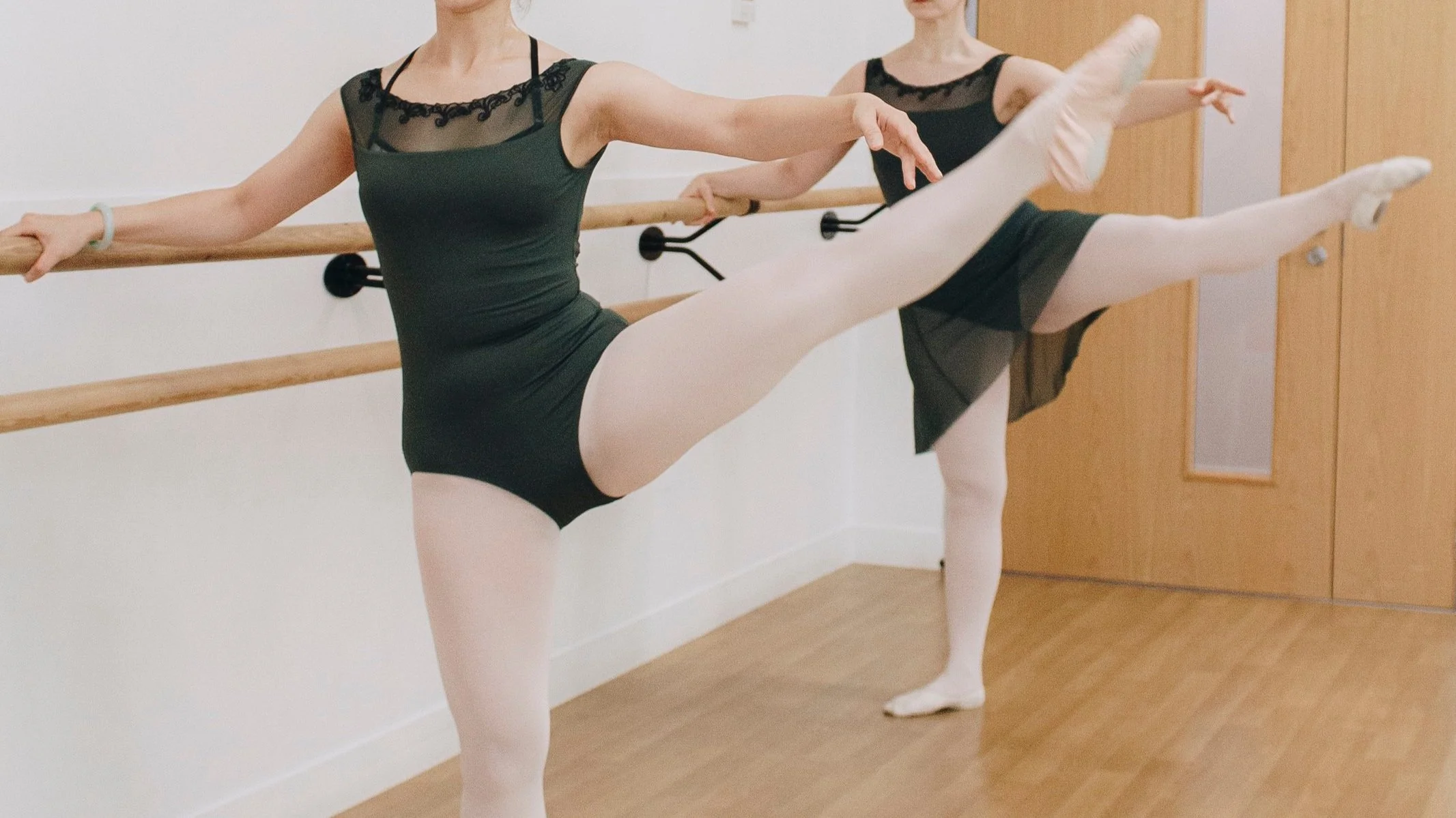
A common "pain" is having the splits on the floor but struggling with leg height (arabesque or developpé) in the centre. This is the difference between passive and active flexibility.
The Fix: You must pair flexibility training with strength training. Healthy, strong muscles are required to hold beautiful positions and reduce injury risk. Complement your stretching with Pilates, Core training, or Progressing Ballet Technique (PBT) to gain the control needed to actually use your flexibility.
7. Track Your Achievements (Not Just Your Failures)
Because progress is slow, it is easy to feel "stuck" or like a "fake dancer" because you aren't the most flexible in the room.
The Fix: Take photos or videos of your stretches. You will be amazed at the progress you’ve made when you look back at a photo from six months ago. Seeing visible proof of your effort is the best way to maintain motivation.
Adult Flexibility FAQs
Is it too late for me to become flexible if I started ballet as an adult?
No. While your rate of adaptation may be slower than a child's, you can improve flexibility at any age through safe, consistent training.
Why can I do the splits but my legs are low in an arabesque?
This is often due to a lack of "functional flexibility." To hold your leg high, you need strength to support your range of motion. Focus on pairing stretching with strength-based classes like Pilates or Ballet Core.
How often should I stretch to see results?
Consistency is key. It is far more effective to stretch for a few minutes every single day than to do one long session occasionally.
About the Author
Miss Inês Coelho da Silva is the Director of STUDIO B Ballet Academy and an RAD Certified Teacher. Having achieved her own front splits only in adulthood, she specialises in helping adult dancers overcome physical limitations through safe, evidence-based training methods.