Ballet on the Go: How to Maintain Your Progress During Hectic Days
Our days often pass by so quickly that we find ourselves wondering: how is it possible to keep practising ballet when we don’t have a full free hour in the day?
For the adult dancer, ballet is rarely a "casual" activity. Ideally, it demands multiple classes per week, dedicated conditioning, stretching, and rehearsal time. However, the reality of adult life often limits us to perhaps one or two classes a week (if we’re lucky) within an inconsistent schedule. This often leaves us feeling undertrained and constantly "behind" in class.
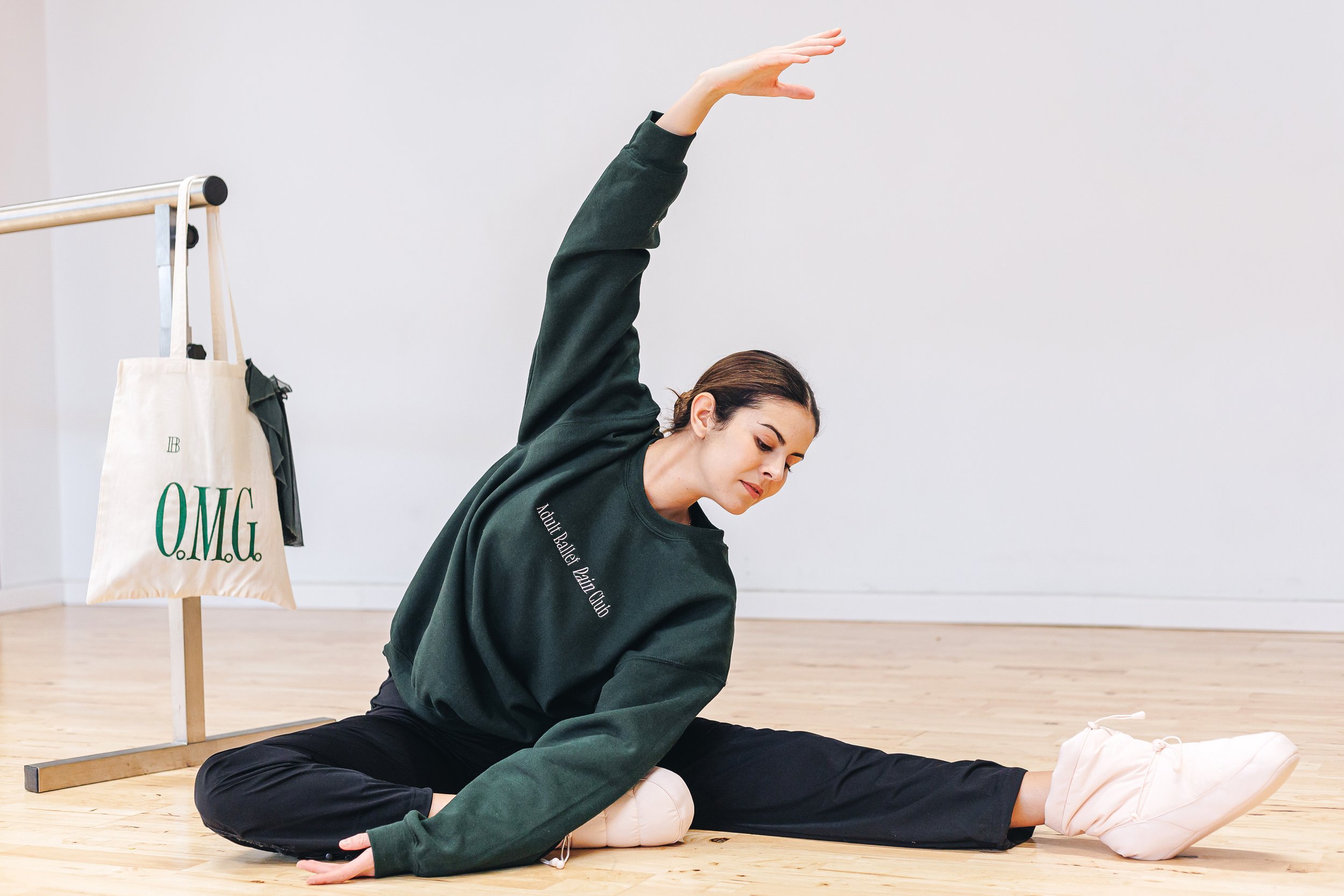
The Challenges of the Adult Dancer
Being an adult ballet dancer means navigating unique challenges that younger students rarely face:
Pre-class Exhaustion: After a full workday, mental fatigue is high and the body is often stiff from hours of sitting. Showing up to the studio (even if online) physically present but not at your best can lead to poorer technique and rising frustration.
The Priority Juggle: Ballet is deeply meaningful, yet it must compete with career responsibilities, relationships, and the vital need for rest. When life gets busy, ballet often becomes negotiable, leading to guilt when classes are missed and stress when trying to keep up.
The Progress Gap: It is easy to fall into the trap of comparison, especially when surrounded by younger dancers or those with more flexible schedules. These structural limitations can make your own progress feel unfairly slow, sparking self-doubt.
The Stop-Start Cycle: Perhaps the most frustrating element is the lack of continuity. Work gets busy, classes are missed, technique regresses, and confidence drops. This cycle prevents true mastery and makes every improvement feel fragile.
Introducing "Ballet on the Go"
At STUDIO B Ballet Academy, our dancers have gathered their best ideas on how to keep training even during the most hectic times. The secret lies in moving away from the "all or nothing" mindset. If you don't have a full hour, you can still find moments for "Ballet on the Go".
“Here are my favourite ways to keep practising ballet while I'm busy!
- Battements tendus while brushing my teeth! I call them 'Teeth tendu'!
- Pedals and rises waiting for the bus or train: I was worried that people would think I look silly, but actually people just think you are impatient and lots of people kick their feet when they're waiting. This is just more… um… productive.
- Torso posture when sitting - it's easy to engage your core and shoulders while sitting.
- STRAIGHT KNEES. Standing, walking, enough said!
- While waiting for class or for someone, ronds de jambe in the centre. This improved my balance within only one week, and I didn't mind people being as late!
- Some say the point of sitting is to relax, but for me, the “pointe” of sitting is the perfect time to flex your feet and toes, roll my ankles and do my toe exercises!
- Plies when bending down to pick up things keeps your posture and is much better than bending over with your bottom in the air!
- Also, don't forget to port de bras on the way back up!”
Charlotte
“Inspired by a friend of mine, I lowered the temperature of my radiator to save on Russian gas. Whenever I get cold, I take off my shoes and practice the sitting Entrechat exercise (crossing legs quickly, taking a break, then crossing legs quickly again).”
Giò
“I do most of my practice in the kitchen while cooking or waiting for food to eat up. I tend to go for pliés, ronds de jambe or pirouette prep. I also spend a lot of time in the car (on the passenger’s seat) and tend to do a bit of footwork there. I also do battements tendus while brushing my teeth!”
Rita
“When I'm sitting, I practise my ronds de jambe and battements fondus. Of course, I don't have the space to do it all perfect and pretty, but this exercise helps me to understand the movements and gain muscle memory!”
Marta
“I mainly have desk work, so I have my foot massage roller at hand which I use throughout the day, especially when I'm stressed. Rises when I'm cooking and, of course, the feet exercises when I'm at the beach!”
Vivekka
“When I'm talking with someone, standing, I work on my turnout and stand in 3rd or 5th position!”
Rita
“I am a fan of rises brushing my teeth and glute stretches while working on the computer. I also like to work on the floor sometimes and I open my legs out in a stretch.”
Inês
Miss Inês suggests toe exercises and feet massages when sitting, stretching while watching television, doing rises and relevés while waiting for your food to heat up and running choreography in your head during your shower or your commutes - thinking about your combinations is a great way to train without even moving! Watching ballet videos, documentaries or ballet shows will also inspire you, as watching professionals performing the movements you are struggling with will give you the motivation to keep trying and some ideas on what to aim for!
By integrating micro-practices, you break the cycle of regression. These small acts of consistency ensure that when you do step back into the studio, you aren't starting from zero.
Frequently Asked Questions (FAQs)
How many times a week should an adult practise ballet?
While 2–3 sessions are ideal for technical growth, consistency is more important than volume. Shorter, but more frequent, sessions can be more effective than one long class followed by a week of inactivity.
Can I improve in ballet if I started as an adult?
Absolutely. Progress may look different than it does for a professional track teenager, but with a focus on proper alignment and consistent training, adults can achieve high levels of technical proficiency and artistry.
How do I deal with fatigue before an evening class?
Focus on a "transition ritual." Even five minutes of mindful breathing or dynamic stretching before leaving the office can help bridge the gap between "work mode" and "ballet mode."
About the Author: Inês Coelho da Silva
Inês Coelho da Silva RAD RTS, Silver Swans®️, PBT®️, Pointe Fitter
Inês Coelho da Silva is the Director and Principal Teacher at STUDIO B Ballet Academy. Inês is dedicated to making the discipline and beauty of ballet accessible to those with demanding modern lifestyles. Her approach was born from observing the real-world challenges of her students, focusing on sustainable progress, injury prevention, and the joy of movement, regardless of how busy the schedule.